Almost everyone books their chimney sweep in September and October. It’s the worst possible time to do it — here’s why, and when you should be booking instead.
What happens every autumn
The first genuinely cold week arrives, everyone thinks about their fire at the same moment, and every sweep in the region is booked solid for two or three weeks. If you ring in mid-October wanting your chimney done before the weekend, you’re going to be disappointed — and if there turns out to be a problem, you’re then waiting again for whoever needs to fix it.
Meanwhile, from about March onwards, it goes quiet.
Spring and summer are the better time, for four reasons
You get a choice of dates
Out of season we can usually offer you a few options rather than whatever’s left. If you want a specific day, or you need to work around childcare or a delivery, that’s far easier to arrange in May than in October.
Problems get found while there’s time to fix them
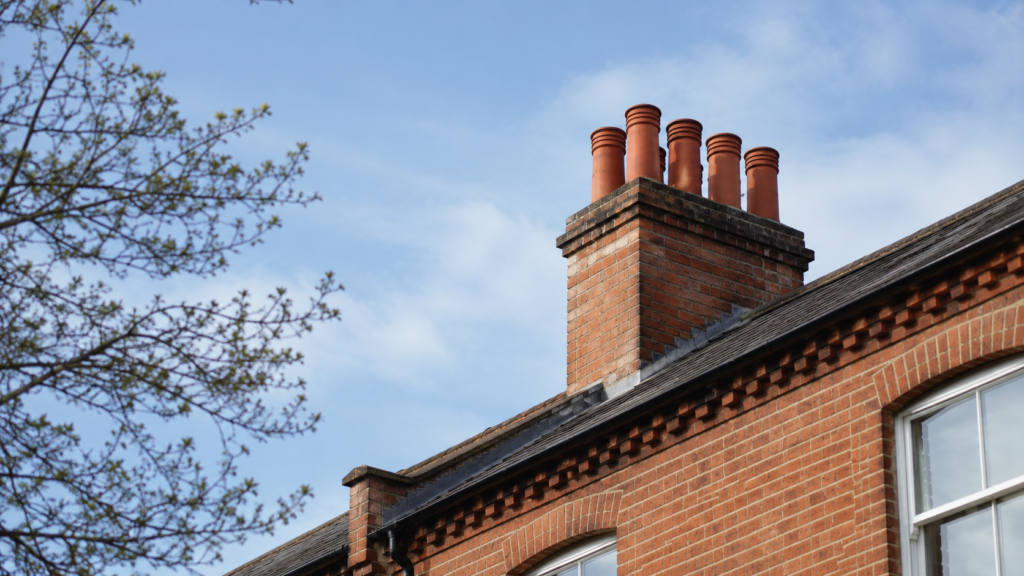
This is the real argument. A sweep isn’t just a clean — it’s the one time each year someone properly looks at your flue and your stack. If we find a cracked pot, failing flaunching, a liner on its way out or damage from a chimney fire you didn’t know you’d had, you want to be finding that out in April with a whole summer to sort it. Not in November, with the temperature dropping and every roofer in the area busy.
The flue is properly cold
We need the fire to have been out for at least 24 hours before we sweep. In the middle of winter that means a cold house for a day. In summer it costs you nothing.
Everything that’s been sitting in there all summer comes out
Soot left in a flue over a warm, damp summer draws moisture. That’s where the musty smell comes from, and it’s how corrosion gets going on liners. Sweeping at the end of the season rather than the start means it isn’t sitting there for six months.
The nesting problem
There’s one genuine complication with summer sweeps. Jackdaws nest in chimneys, and once there are eggs or chicks in there the nest can’t legally be removed until they’ve fledged — wild birds’ nests are protected while in use.
That cuts both ways, though. If a chimney is swept in early spring and fitted with a bird guard, the birds never get in. If it’s left, you may find yourself unable to use the fire in autumn while you wait for a nest you can’t touch.
So when should you book?
- Best: late spring or summer, once you’ve stopped using the fire for the season
- Also fine: early autumn, if you get it in before the rush starts
- Harder: October through December — expect to wait
- Immediately, whatever the month: if the fire is smoking back, you can hear anything in the flue, you can see tar, or your carbon monoxide alarm has sounded
How often, again?
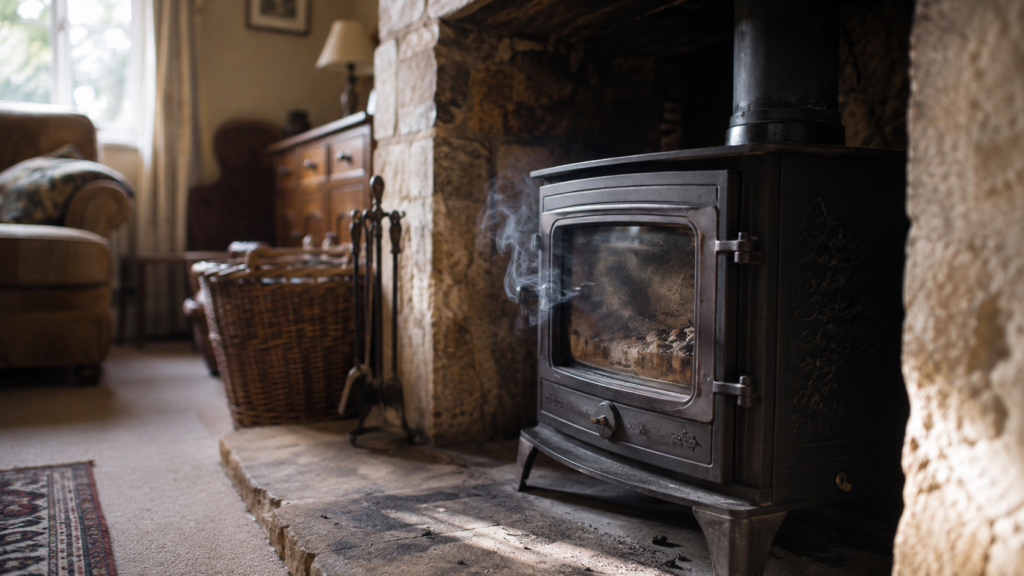
Once a season for wood on an open fire, twice a season for a wood-burning stove, twice a year on bituminous coal, once a year on smokeless fuel, oil or gas. If your stove is your main source of heat rather than an occasional evening fire, err towards more often.
Book while it’s quiet
We’re NACS registered and cover Greater Manchester, Cheshire and Lancashire. Every sweep includes a free smoke draw test and a certificate recognised by insurers.
Call 07941 879853 or get in touch. Tell us your postcode, the type of fire, and roughly when it was last swept.