NACS registered · Fully insured
Bird Nest Removal
Jackdaw and bird nest removal from chimneys and flues across Greater Manchester and Cheshire. NACS registered, fully insured, and we will tell you honestly whether the nest can legally be touched yet.
A nest is a total blockage
Jackdaws are the usual culprit in UK chimneys. They drop sticks down an open flue until enough of them wedge, then build on top — and a single nest can fill several feet of chimney with tightly packed material. It is not a partial restriction. It is a complete block.
That matters more than the inconvenience of a fire that will not draw. With the flue blocked, combustion gases have nowhere to go but back into your room, and solid fuel appliances produce hundreds of times more carbon monoxide than gas or oil. If you can hear anything moving in your chimney, do not light the fire.
Unused flues are where nests turn up most. Large houses with fireplaces in rooms nobody lights, or a chimney that has been out of service for years, are exactly the ones worth checking before they are brought back into use.
The legal position, and why timing matters
Wild birds’ nests are protected under UK law while they are in use or being built. In practice that means if there are eggs or chicks in your chimney, the nest cannot be removed until the birds have fledged — however inconvenient that is, and whoever you call.
We will tell you straight which situation you are in rather than take the job and hope. If the nest is active you will need to wait; if it is abandoned material left from a previous season, we can clear it.
This is the strongest argument for having it dealt with early in the year rather than in October. A chimney checked and guarded in late winter never gets a nest in it. A chimney left until autumn may leave you unable to use the fire while you wait.
- Scratching, rustling or bird noise in the chimney — do not light the fire
- Sticks or nesting material falling into the hearth
- A fire that suddenly will not draw at all, rather than drawing poorly
- Birds seen repeatedly landing on or entering the chimney pot
What we do
- Check the stack and pot before anything else, usually with binoculars
- Establish whether the nest is active — and tell you honestly if it cannot yet be touched
- Remove the nest and clear the flue of all packed material and debris
- Sweep the flue properly once it is clear
- HEPA filtered industrial vacuum running throughout — this is a messy job done cleanly
- Free smoke draw test to confirm the flue is clearing properly again
- NACS Certificate of Chimney Sweeping on completion
No mess, and a certificate your insurer accepts
Sheets down before we start and a HEPA filtered industrial vacuum running throughout. Every job includes a free smoke draw test and a NACS Certificate of Chimney Sweeping — which matters, because most insurers will no longer pay out on chimney fire damage without one.
Stopping it happening again
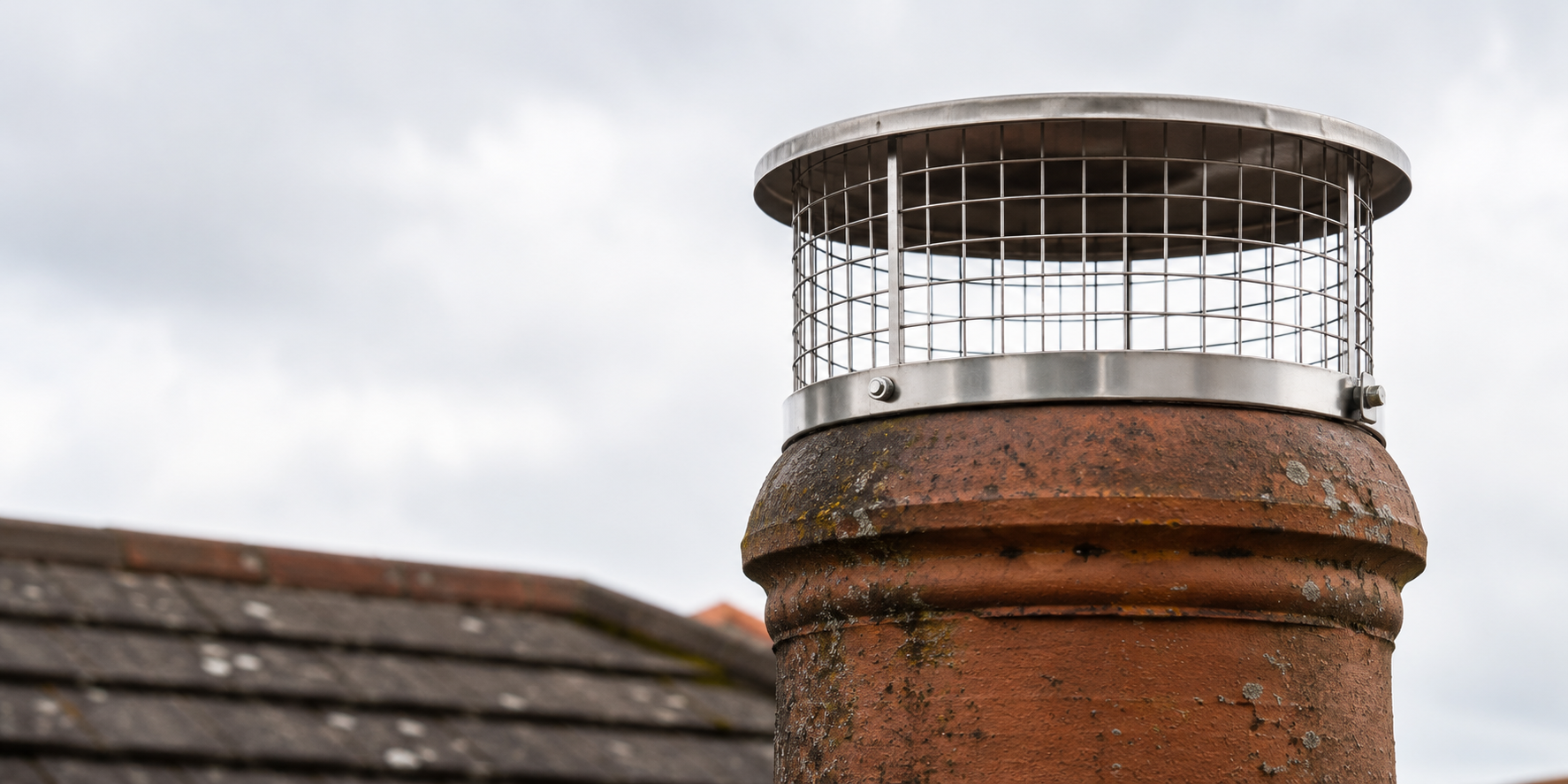
Once a flue has been nested in, it will be nested in again. Jackdaws return to sites that worked. The fix is a bird guard or a suitable cowl fitted to the pot, which keeps birds out while letting the flue breathe.
Worth knowing: a guard or cowl needs to be accessible so the flue can still be swept, and some insurers have views on what may be fitted. Ask us before you commit to one.
There is more on fuels, moisture content and ventilation on our safety advice page.
Our other services
Whichever appliance you have, the standard is the same.
Where we work
Greater Manchester, Cheshire and Lancashire. Give us your postcode and we will tell you straight away whether we can reach you.
Common questions
The clearest signs are noise — scratching or rustling in the flue — sticks or nesting material falling into the hearth, or a fire that suddenly will not draw at all rather than drawing poorly. If you can hear anything up there, do not light the fire.
Not if it is active. Wild birds’ nests are protected while in use, so if there are eggs or chicks the nest has to stay until they have fledged. Abandoned material from a previous season can be cleared at any point. We will tell you which you have.
In almost all cases, yes — that is what they are for. It needs to be the right type for your pot and flue, and it needs to stay accessible so the chimney can still be swept. Ask us before buying one.
Yes. It takes considerably longer, it is heavier work, and the flue then needs sweeping properly once it is clear. Give us a ring with your postcode and what you are hearing and we will give you a figure.
Think you have a nest?
Give us a ring and describe what you are hearing or seeing. We will tell you what it sounds like, whether it can be dealt with now, and what it will cost.