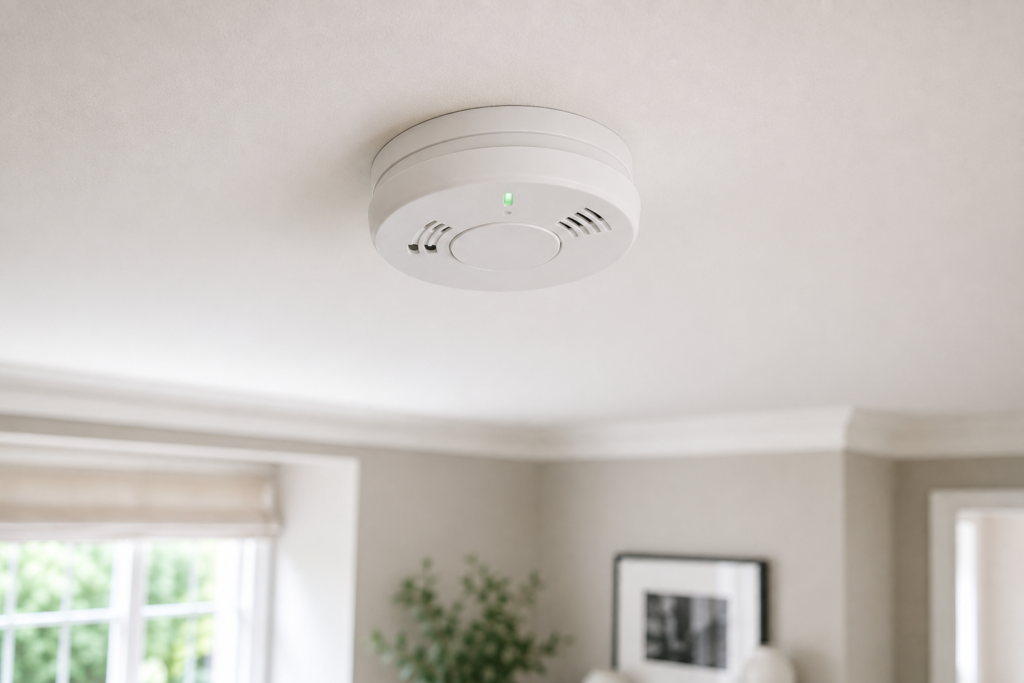
We supply and fit carbon monoxide detectors and fire and smoke alarms for customers throughout Greater Manchester, Cheshire and Lancashire — and we can do it while we are with you for a sweep.
Solid fuel produces far more carbon monoxide than gas
It is commonly believed that only gas appliances produce carbon monoxide. In fact every appliance that burns fuel produces it — and your solid fuel stove or open fire produces hundreds of times more than a gas or oil appliance.
Carbon monoxide has no colour, no smell and no taste. A detector is the only way you will know it is there. If you have any kind of fire in your home, having the correct alarms fitted and working is not optional.
Where detectors need to go
Positioning matters as much as having one. A detector in the wrong place gives you false confidence rather than protection. When we fit one we will site it correctly for the appliance and the room, and show you how to test it — most people never test theirs, and a detector with a dead battery is no detector at all.
Detectors have a service life too, typically around seven to ten years depending on the model. If yours has been on the wall since you moved in, it may well be past it.
You have had a stove or fire newly installed
You have reopened a fireplace that had been blocked off
You have had a chimney fire, or suspect you have
You have flues in a shared or terraced stack, where one flue can affect another
You are letting a property with a solid fuel appliance
Your existing detector is more than seven years old, or you cannot remember fitting it
What we do
Supply of carbon monoxide detectors and fire or smoke alarms
Fitting, sited correctly for the appliance and the room
A demonstration of how to test it properly
Checking and testing your existing alarms while we are with you
Fitted during a sweep, so there is no second visit
No mess, and a certificate your insurer accepts
Sheets down before we start and a HEPA filtered industrial vacuum running throughout. Every job includes a free smoke draw test and a NACS Certificate of Chimney Sweeping — which matters, because most insurers will no longer pay out on chimney fire damage without one.
Test your detector monthly using its own test button. Check the manufacture or expiry date printed on the casing — most units have a service life of around seven to ten years, after which the sensor is no longer reliable regardless of whether the battery is good.
If your alarm has sounded even once, never treat it as a fault. Stop using the appliance, ventilate the room, and get the flue checked before you light it again.
There is more on fuels, moisture content and ventilation on our safety advice page.
Our other services
Whichever appliance you have, the standard is the same.
Typically seven to ten years depending on the model. Check the date on the casing — after that the sensor is no longer reliable even with a fresh battery.