If your flue is tarring up, your fuel is usually the reason. And the word “seasoned” on a bag of logs tells you almost nothing.
The only number that matters is 20%
Wood should be under 20% moisture content when you burn it. That’s it — that’s the whole test. Everything else is marketing.
Plenty of suppliers describe wood as seasoned. It’s not a regulated term in any meaningful sense, and it can mean anything from properly dried to cut last spring and left in a heap. Two suppliers can both say seasoned and sell you wood that behaves completely differently in the stove.
What wet wood actually does
Burning wood above 20% moisture costs you three ways.
You get less heat. Energy that should be warming your room goes into boiling off water instead. Wet logs can give you as little as half the usable heat of dry ones, so you burn more to get the same warmth.
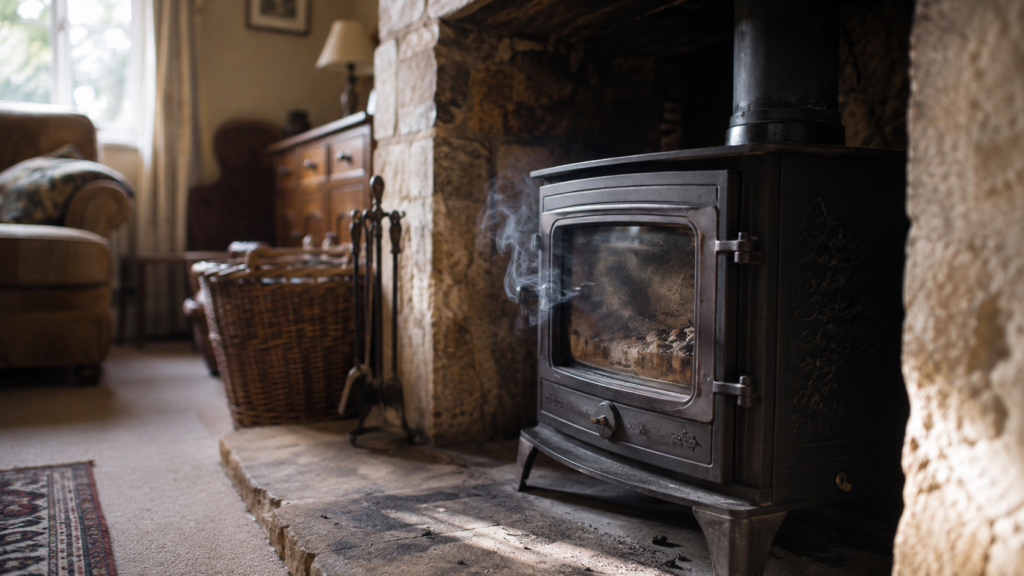
You get more smoke. Incomplete combustion means visible smoke, more pollution, and blackened stove glass. If your glass keeps going black, that’s the first thing to look at.
You get tar. This is the serious one. Unburnt volatiles condense in the cooler upper flue as a sticky, shiny deposit that hardens over time. Tar is highly flammable and it’s the biggest single cause of the chimney fires we come across.
Once tar is properly established it can’t be removed by normal sweeping. It’s specialist work to take out, it’s expensive, and where the build-up is bad it’s often easier to pull the liner and fit a new one than to clean it.
How to actually check
Buy a moisture meter. They cost very little and they end the argument permanently. Split a log first and test the freshly exposed inside face — the outside of a log dries long before the middle does, so testing the surface will give you a falsely reassuring reading.
Look for the Ready to Burn logo if you’re buying in smaller quantities. It’s the certification scheme for wood sold in volumes under 2m³ in England, and certified wood is guaranteed under 20%.
The rough tests — dry logs are noticeably lighter than they look, they have splits and cracks radiating from the end grain, and knocked together they give a sharp crack rather than a dull thud. Useful as a first impression, no substitute for a meter.
Storing them properly
Most people who buy well then store badly, and lose the benefit.
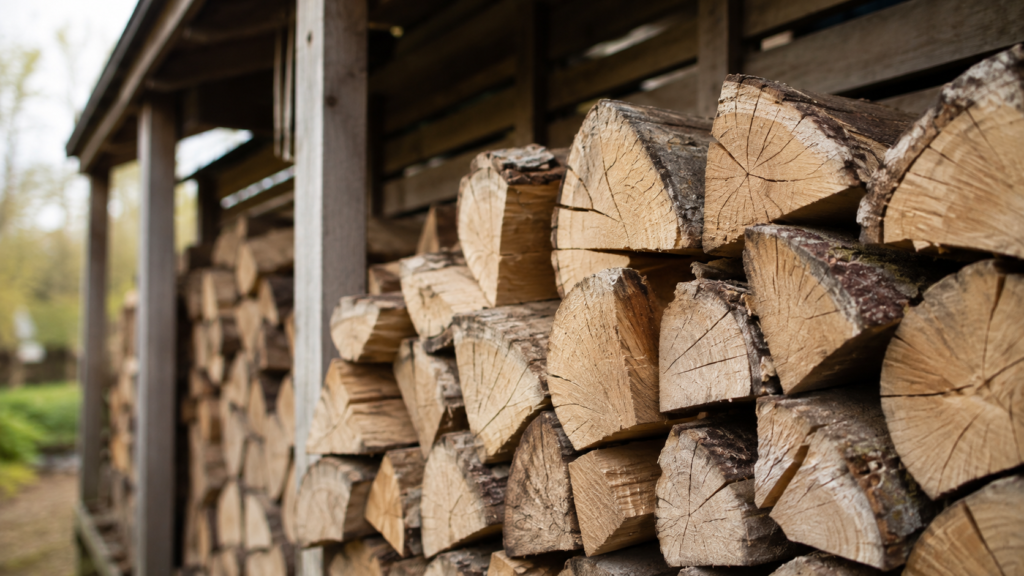
Stack, don’t pile. Air needs to move between the logs. A heap dries from the outside in and stays wet in the middle.
Ventilation matters more than keeping the rain off. This surprises people. Correctly stacked logs will keep losing internal moisture even if they get rained on occasionally. Logs sealed under a tarpaulin with no airflow will not dry at all — they’ll rot.
The best store has a roof and open sides. Cover the top, leave the sides to breathe, and keep the stack off the ground.
Don’t let it rot. Wood that isn’t kept aired starts to break down, and rotten wood won’t burn properly however dry you eventually get it.
Bring logs inside a few days before you burn them. A stint in a warm room takes the edge off the last of the moisture.
What not to burn, ever
- Man-made board — MDF, plywood, chipboard. Low heat, heavy tar, and toxic fumes from the adhesives.
- Treated or painted timber. Same problem, worse.
- Cardboard, waste paper and Christmas trees. Fragments get drawn up the flue and can ignite soot deposits. Your fire is not a waste bin.
- Coal or smokeless fuel in a wood-only stove. Very little heat, a great deal of soot — the appliance was never designed for it.
And don’t slumber the stove
Shutting the air right down to keep a fire in overnight is one of the fastest ways to lay tar down in a flue. It’s dangerous, it’s costly, and it’s highly polluting. If you want the room warm in the morning, that’s what the heating is for.
If you think your flue is tarring up
Get it looked at rather than waiting for the next scheduled sweep. We’ll tell you honestly what we find — including if the cause is your fuel rather than the sweeping interval.
We’re NACS registered and cover Greater Manchester, Cheshire and Lancashire. There’s more on fuels and ventilation on our safety advice page, or see our woodburner sweeping page.
Call 07941 879853 or get in touch.